Wolf Canyon Residence: From Weekend Trip to Wildfire Survival
The ‘vacation house’ in rural Twisp, WA began as a weekend trip with some friends to an area my wife and I had been visiting for years, with no intention of buying anything other than a few good meals out. In the middle of this trip, we met a realtor friend of friends who eventually took us to an out-of-the-way location by the name of Wolf Canyon. This was an expansive area where a handful of rural lots were for sale after being separated from a former ranching operation. It was fall, the afternoon light was beautiful, and the setting hooked us in as we drove through an abandoned hayfield, tall strands of dry grass laying down in front of us as we went.
Six months and a few rounds of negotiations later, we were the joint owners of 40 acres of sagebrush low on the valley walls of Wolf Canyon near Beaver Creek. The next few years were difficult as we juggled newborns with design, land development, and construction. Our ideas about building a simple, small cabin proved to be absurd given the complexity of developing raw land. It didn’t help that we lived over 4 hours away by car, and didn’t have any local connections.
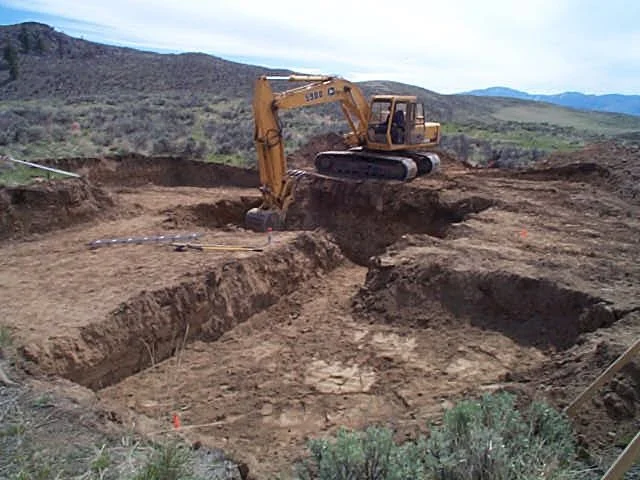
An excavator develops the land for the house to be built upon.
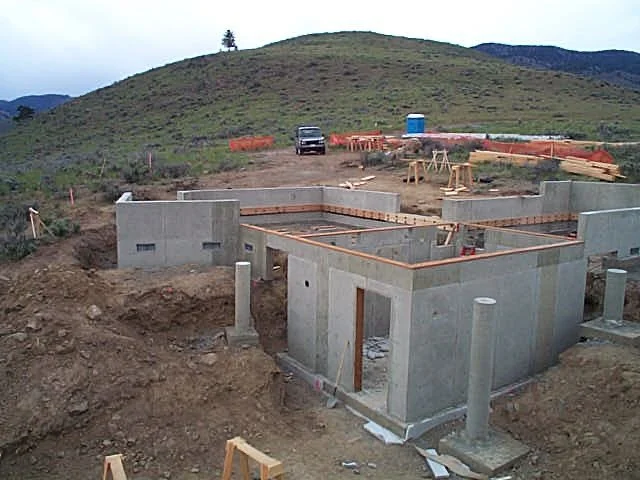
The foundation balances on the top of a sloping hill.
My initial ideas about acting as my own general contractor evaporated after making a dozen calls to various sub-contractors and getting no response from anyone. So I found a local GC named Brian Tuller, and we worked out an arrangement where his team managed the land development (roads, power, water, septic and excavation) and I made arrangements to spend 6 weeks framing the house and installing windows, doors, and house-wrap. We then took the summer ‘off’ to have our second child, before re-engaging with Brian to get the interior finished enough to use by the following summer.
The house we built had a large living, dining, and kitchen area, accompanied by a mudroom, a full bathroom, and one small bedroom. The main space was focused on distant views to surrounding mountains, and had doors to a patio on the shaded side and a deck on the sunny side. After 3 years the house-wrap began to fail, so I found a builder friend and spent a long week installing sheets of factory painted steel in a shingle-like pattern as permanent siding. Then we got tired of unfinished interior walls and hired Brian to finish the interior.
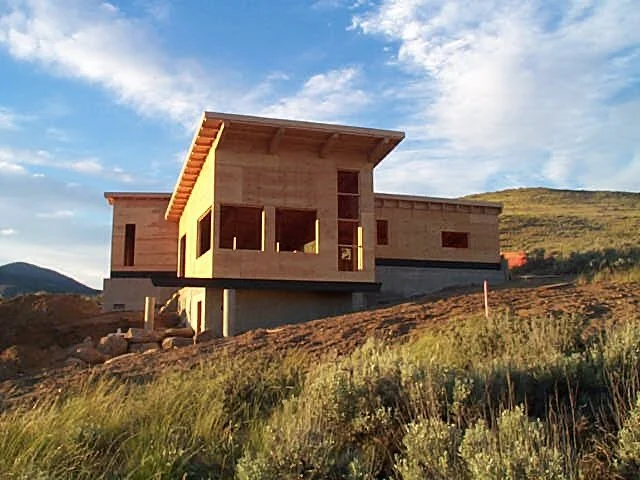
Large windows in the living space captured sunlight from across the valley.
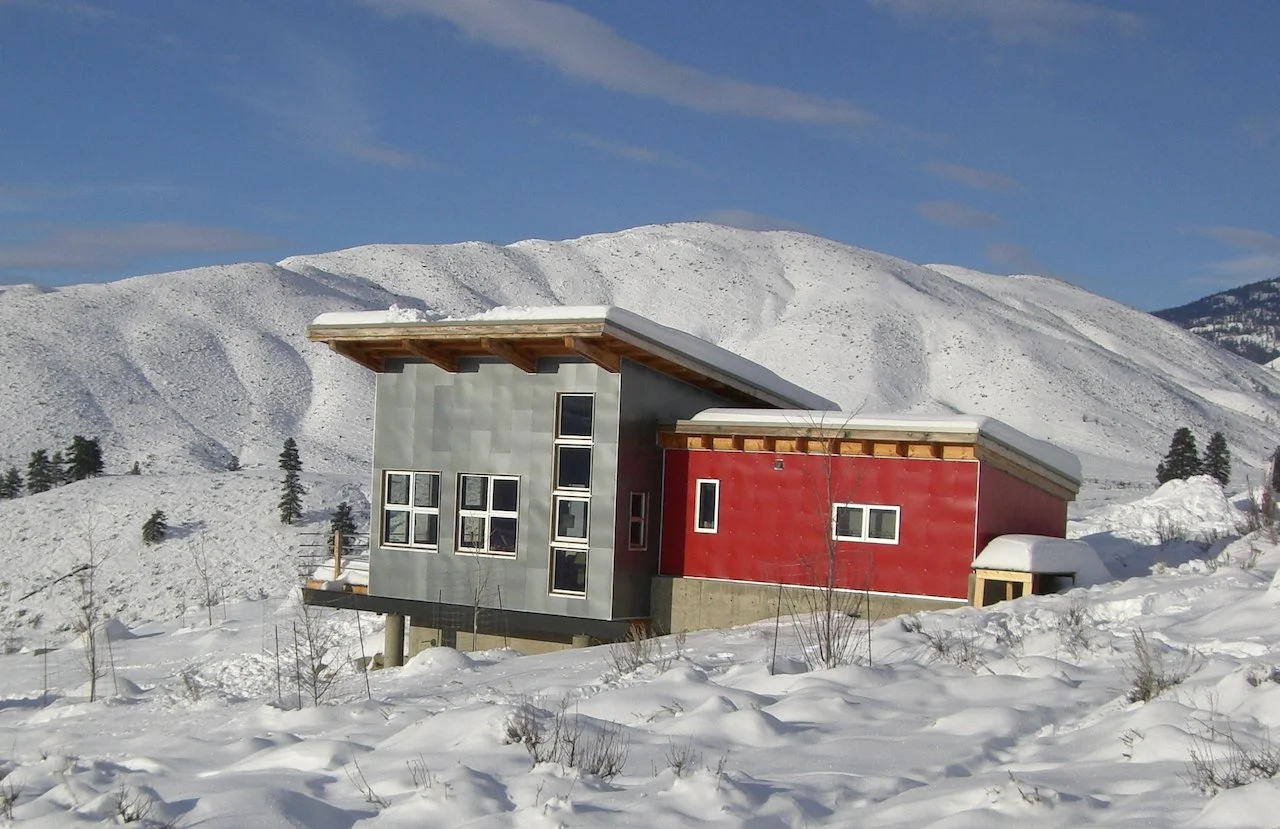
The painted steel exterior brings a shine to the cabin’s image.
Over the years our kids got bigger and we started to feel like having guests was less appealing given the limited space, so we decided to expand the house by building an addition with 4 bedrooms and another bathroom. This proved to be the best decision ever as it allowed early risers to make noise in the main house without disturbing late sleepers. Following another long week installing more metal siding, the house was finally finished. It became our annual holiday destination.
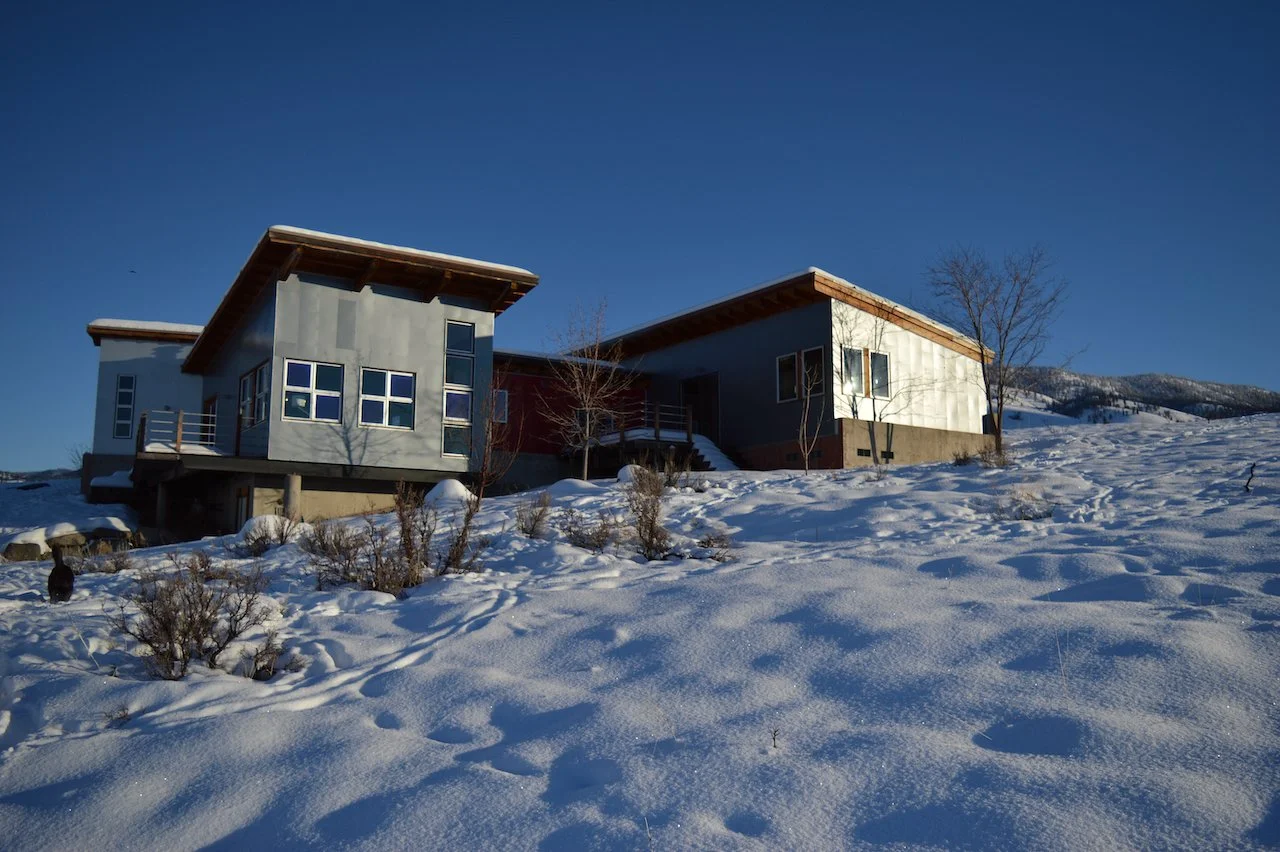
With the addition of 4 bedrooms and an extra bathroom, the cabin was able to host friends and family comfortably all year round.
Then came the summer of 2014. The hot and dry climate would seed wildfires that devastated the Methow Valley. This year in particular saw over 256,000 acres of the valley get torched by four fires that converged into a ‘complex’ of destruction. The Carlton Complex Fire is still the largest wildfire in Washington State history. At the time, we were vacationing in Europe, constantly checking our phones for any update about the fire’s progress. It felt like every hour we were learning about another house, barn, or cabin getting swallowed up in the blaze, all while wondering whether our home would be next.
We got incredibly lucky. Since the building sat exposed on a hill, a plane had flown overhead and dropped fire retardant on it. Our home survived as the earth around it was engulfed. A feeling of relief was soon replaced by sadness as we learned that our neighbors’ home, located a quarter mile away and shaded by a grove of trees, had not been spotted by the plane. Their house was reduced to ash. The worst part was they lived there full-time.
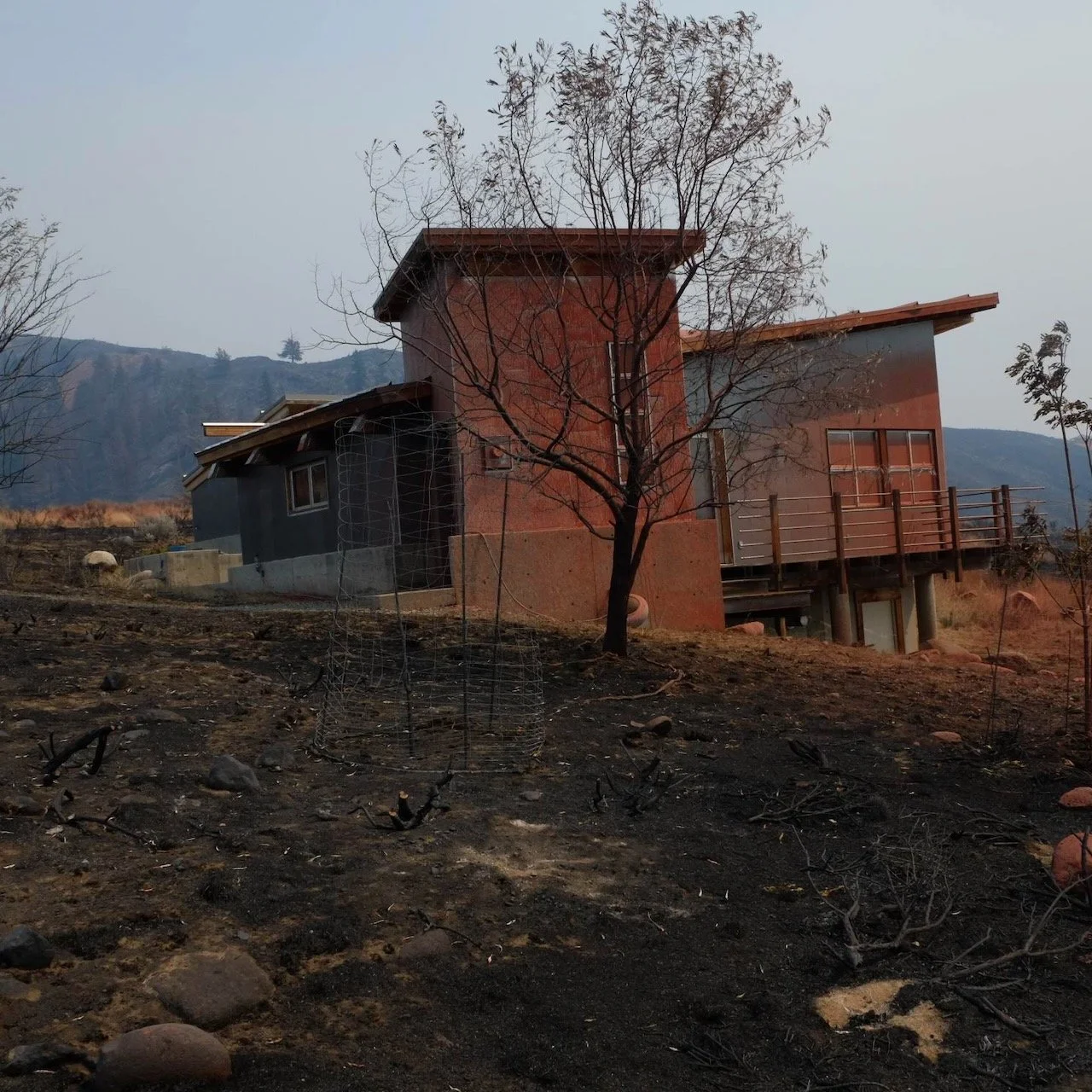
Dry vegetation around the house was consumed by the fire. Red fire retardant stains the cabin.

Despite being covered in retardant, the thermometer that was attached to the house melted from intense heat.
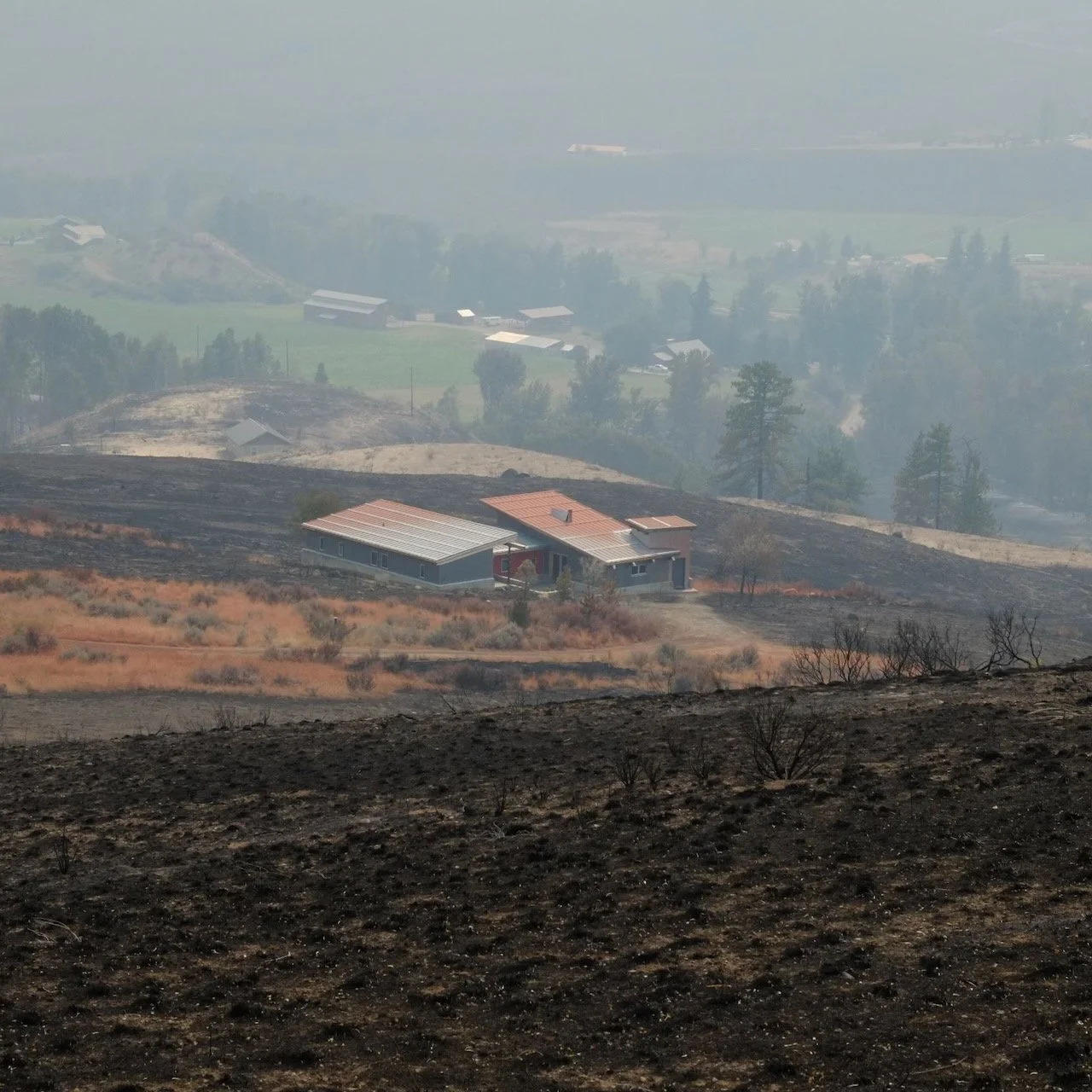
From the hilltop above the cabin, one could survey the scorched earth. Farmland located low in the valley stayed intact via irrigation systems.
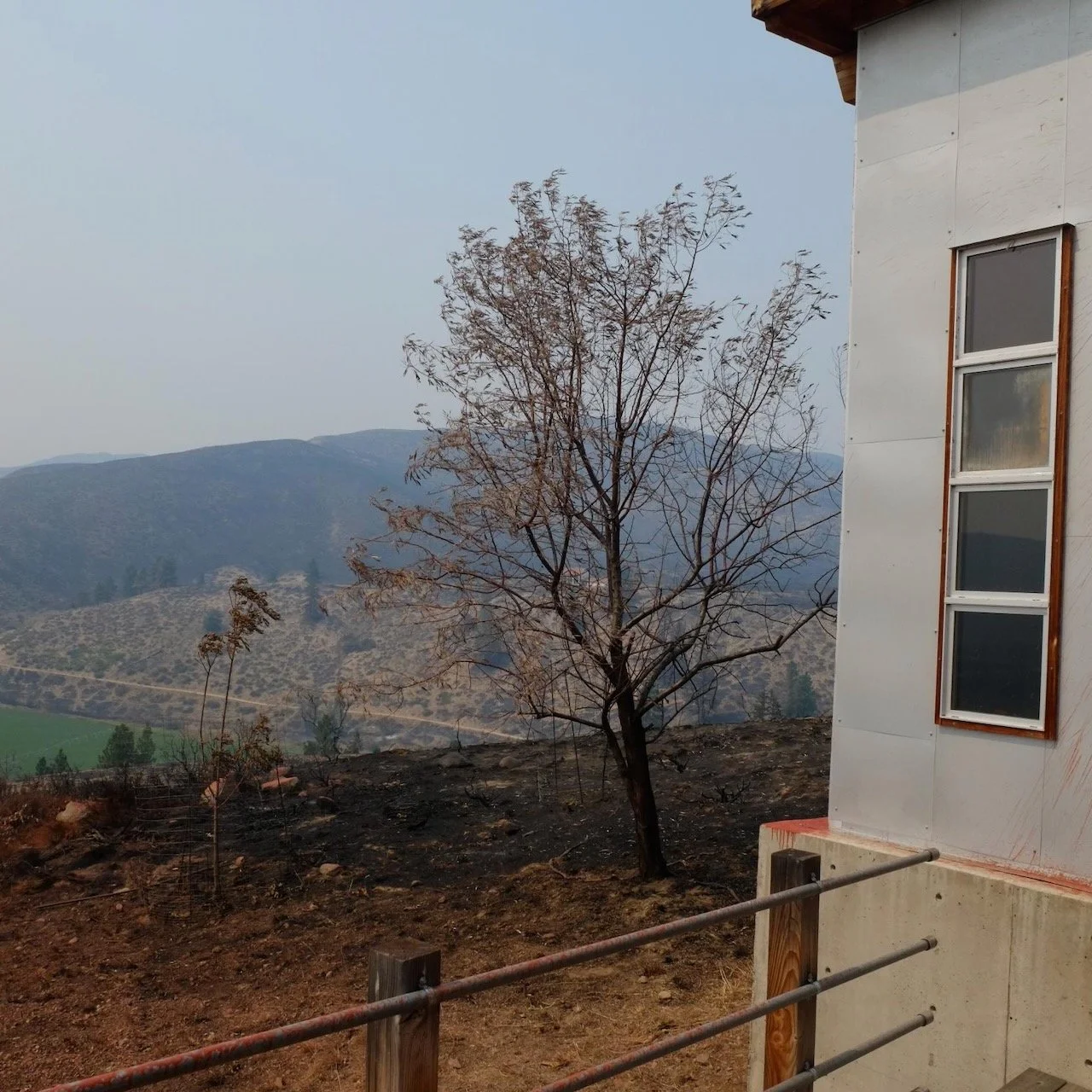
Miraculously, the cabin survived the blaze.
Later that summer, my wife and I made the journey to our cabin, hearts heavy as we drove through a valley full of ash, charcoal, and smoke. We spent multiple days scrubbing the residue of retardant off of our home. We were so grateful that our place was intact, and it would carry a red stain for years to come, reminding us how lucky we were to continue to have a place to visit.
The kids grew up going there, we shared the place with many friends, and created lasting memories that we’ll cherish forever. With time, everything eventually changes, and the moment arrived when it made sense to sell the house so we could start spending time in other places. The incredible journey associated with the house and the place ran its course, but we will always have the memories of and satisfaction that we made something special.
Brian Neville
Owner & Founder
Van Zandt Development + Building